SUMMARY
Indoor air quality expectations are rising in New York City, and poor ventilation is increasingly treated as a tenant experience and risk issue, not just a comfort complaint. In winter, buildings often run tighter, and ventilation shortcuts can lead to higher Carbon Dioxide (CO2) levels, more service tickets, and avoidable HVAC strain. Below, we break down the real cost drivers behind underperforming ventilation and what “2026 expectations” will look like for owners, property managers, and facility teams.
What does “poor ventilation” actually mean in an office building?
Ventilation is how outdoor air is introduced and indoor contaminants are diluted or removed, typically via air handling units, ductwork, exhaust, and control sequences.
In real NYC offices, “poor ventilation” usually isn’t one failure. It often shows up as a combination of issues: outdoor air intake set too low for actual occupancy, uneven air distribution that creates dead zones, dampers/filters/controls that are out of calibration, schedules that don’t match hybrid work patterns, or imbalanced exhaust and make-up air that pulls in pollutants from adjacent spaces or the building envelope.
Even when a building technically meets code minimums, it can still underperform from a tenant standpoint. That gap between “minimum compliant” and “tenant acceptable” is exactly where hidden costs tend to show up.
Why poor ventilation gets more expensive in NYC winters
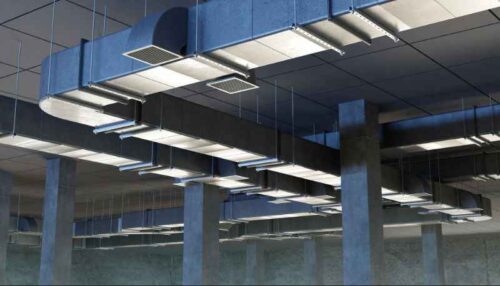 Winter tightens the building. Windows stay closed, outdoor air is cold and dry, and some operators reduce outdoor air to limit heating penalties. The result is a familiar pattern: higher CO2 in conference rooms and shared areas, more “stuffy” complaints, and longer troubleshooting cycles.
Winter also exposes control issues. Demand-Controlled Ventilation (DCV) can help balance indoor air quality and energy use, but only when sensors are accurate and sequences are tuned correctly. When ventilation is mismanaged in winter, owners often pay twice, once in energy and again in complaints.
WHY BUILDING MANAGEMENT SYSTEMS ARE IMPORTANT FOR HVAC
The hidden cost categories most building owners do not budget for
1. Tenant complaints, churn, and leasing friction
Indoor Air Quality (IAQ), the overall condition of the air indoors, including freshness, filtration, pollutants, and comfort, is now a tenant-facing metric. When occupants experience headaches, fatigue, odors, or uncomfortable meeting rooms, the building gets blamed, even if the root cause is isolated to one zone or a drifting control sequence. The cost isn’t just the service call. It’s property management time, reputational drag, and leasing friction in competitive NYC submarkets.
2. Absenteeism and productivity impacts that become a building issue
Tenants increasingly connect workplace quality to performance. Ventilation, CO2, and pollutant exposure are often part of that conversation, especially for office environments trying to bring people back consistently. You don’t need to promise a specific productivity percentage to see the implication: tenants want evidence ventilation is being managed, not guessed.
3. Energy waste from “brute force” fixes and bad sequences
Poor ventilation doesn’t always mean “too little outdoor air.” Sometimes it’s outdoor air being used inefficiently: dampers stuck open, heating and cooling fighting each other, fans running too long because schedules are outdated, or over-ventilating low-occupancy areas while high-occupancy zones still feel stale. A strong strategy delivers the right ventilation at the right time, not peak-occupancy operation 24/7.
4. Equipment wear, maintenance issues, and avoidable downtime
Ventilation problems can stress the entire system, fans working harder due to restrictions or imbalance, filters loading faster, coils fouling, and controls drifting (especially in older NYC buildings with mixed generations of equipment). The real cost isn’t only parts and labor; it’s emergency disruption, tenant coordination, and the risk that a small control issue becomes a major comfort event.
CONDUCTING HVAC SYSTEM ANALYSIS: A COMPREHENSIVE GUIDE
What is changing in 2026: Standards, tenant expectations, and documentation
When people talk about “2026 standards,” it helps to separate code minimums from market expectations.
NYC’s mechanical code sets the baseline, but tenants and engineering teams often track guidance from the American Society of Heating, Refrigerating and Air-Conditioning Engineers (ASHRAE) as a performance target, sometimes well before local adoption catches up. That’s why 2026 expectations increasingly mean: “Show me how you’re performing,” not “Tell me you’re compliant.”
What we see more tenants asking for moving into 2026: clear ventilation setpoints and schedules aligned to occupancy, documented filtration and maintenance practices, basic IAQ monitoring (often CO2 and particulates), and the ability to shift into higher clean-air modes when needed.
How we help NYC buildings get ahead of ventilation expectations
At Donnelly Mechanical, we treat ventilation and IAQ as operational reliability. That means measurable performance, not trial-and-error.
We support building owners and facility teams by optimizing controls and ventilation sequences to reduce repeat comfort tickets and energy waste, building customized maintenance agreements based on equipment and occupancy realities, and helping buildings transition smoothly when switching service providers, starting with a documented baseline of how systems actually operate.
If you’re seeing recurring winter complaints, rising energy use, or tenants asking tougher IAQ questions, we can help you build a ventilation plan that holds up to 2026 expectations, without wasting energy to get there.
HOW THE INTERNET OF THINGS (IOT) WILL SHAPE THE HVAC INDUSTRY IN 2025
Ventilation is one driver of indoor air quality (IAQ). It focuses on bringing in outdoor air and diluting indoor contaminants. IAQ is broader: it also includes filtration, humidity control, pollutant sources like volatile organic compounds (VOCs), airborne chemicals that can come from paints, cleaners, furniture, and more, plus cleanliness and how the space actually feels to occupants.
Because buildings operate tighter and windows stay closed. Some operators also reduce outdoor air to avoid heating costs, which can raise CO2 and worsen “stuffy” conditions, especially in conference rooms and high-occupancy zones. Winter is also when controls and sensor accuracy matter most.
Demand-Controlled Ventilation (DCV) adjusts ventilation based on occupancy indicators, commonly CO2. It can reduce energy waste during low occupancy while still responding to high-use spaces, but only if sensors are properly placed, calibrated, and supported by correct control sequences.
Most tenants want specifics: ventilation setpoints and schedules, filtration strategy and change intervals, CO2 sensor calibration practices, and a plan for increasing clean-air delivery during higher-risk periods. Strong documentation reduces disputes and speeds up troubleshooting.
Damper position alone doesn’t confirm outdoor air volume. Verification often requires airflow measurement, control sequence review, and trending through the Building Management System (BMS), the central platform that monitors and adjusts building equipment like HVAC, to confirm the building is delivering what it intends to deliver.
 Get in Touch