SUMMARY: As New York City moves toward 2026, building owners are prioritizing HVAC efficiency upgrades to meet Local Law 97 requirements and reduce operating costs. Key improvements include high-performance heat pumps, VRF systems, smart controls, and heat recovery technology, all designed to boost performance and lower emissions. Partnering with an experienced contractor like Donnelly Mechanical ensures smooth implementation, proactive maintenance, and long-term energy savings for NYC commercial buildings.
—
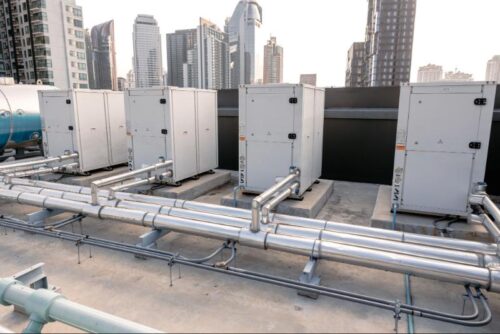 As 2026 approaches, New York City’s commercial real estate sector faces a defining moment for sustainability and compliance. With Local Law 97 enforcement ramping up and energy costs continuing to rise, building owners and facility managers are looking for smarter, cleaner, and more efficient HVAC solutions. The next generation of HVAC efficiency upgrades is here, and it’s reshaping how NYC commercial buildings operate.
Below, we explore the most impactful HVAC upgrades for 2026 that will help property owners reduce emissions, lower operational costs, and ensure long-term compliance.
1. High-Performance Heat Pumps Lead the Transition
Heat pumps have quickly become the gold standard for building electrification — a crucial step in meeting NYC’s ambitious climate goals. New models for 2026 are more powerful and adaptable than ever, capable of providing both heating and cooling efficiently even in the city’s cold winters.
By transferring rather than generating heat, high-performance air-source and water-source heat pumps can deliver up to 3-5 times the energy efficiency of conventional systems. They also integrate seamlessly with renewable energy sources like solar panels or green power purchasing programs.
For buildings still running on steam or gas-fired boilers, transitioning to a hybrid or all-electric heat pump system represents one of the most cost-effective ways to reduce greenhouse gas emissions while maintaining occupant comfort.
2. Variable Refrigerant Flow (VRF) Systems for Flexibility and Control
Another key upgrade driving efficiency in NYC’s commercial sector is VRF technology. These systems precisely regulate refrigerant flow to match each zone’s heating or cooling demand — an especially valuable feature in high-rise and mixed-use properties.
Because VRF systems eliminate unnecessary energy consumption from over-conditioning, they can reduce energy use by up to 30%. They also provide independent temperature control across multiple zones, enhancing comfort for tenants while minimizing waste.
In a city known for older building stock and limited retrofit space, VRF systems are ideal for upgrades that require minimal disruption and compact installation footprints.
3. Smart Building Controls and AI-Driven Optimization
As buildings become more data-driven, smart HVAC controls are revolutionizing how facility managers monitor and manage energy use. Advanced building management systems (BMS) now incorporate AI and predictive analytics to learn occupancy patterns, forecast weather impacts, and automatically adjust HVAC performance in real time.
These systems enable remote monitoring across multiple facilities, automate fault detection, and alert managers to inefficiencies before they lead to costly breakdowns. Integrating smart controls with lighting, ventilation, and energy metering systems creates a connected ecosystem that keeps buildings performing at peak efficiency.
For many NYC building owners preparing for Local Law 97 reporting requirements, investing in smart control systems isn’t just an upgrade, it’s an operational necessity.
READ MORE: WHY BUILDING MANAGEMENT SYSTEMS ARE IMPORTANT FOR HVAC
4. Heat Recovery and Energy Reclamation Systems
Another impactful upgrade is the addition of heat recovery systems, which capture waste heat from exhaust air or process systems and reuse it for space heating or water preheating.
Energy recovery ventilators (ERVs) and heat recovery chillers can significantly reduce the load on boilers and chillers, improving overall energy efficiency and indoor air quality.
In large commercial buildings, particularly those with year-round heating and cooling needs, like hospitals, hotels, or data centers, the ROI on heat recovery equipment can be achieved within just a few years.
5. Electrification and Building Envelope Integration
The path to compliance in 2026 will require more than efficient HVAC systems, it demands a holistic look at how those systems interact with the building envelope. Sealing air leaks, upgrading insulation, and installing energy-efficient windows can dramatically improve HVAC performance by reducing demand.
Pairing these improvements with fully electric systems not only reduces carbon emissions but also positions buildings to leverage renewable energy grids and evolving incentive programs offered by Con Edison and NYSERDA.
READ MORE: 7 BENEFITS OF USING A HYDRONIC HVAC SYSTEM IN COMMERCIAL BUILDINGS
6. Preventative Maintenance: The Hidden Efficiency Upgrade
Even the most advanced HVAC systems can’t reach their full potential without proper care. Customized maintenance agreements — like those offered by Donnelly Mechanical — ensure that every system operates efficiently year-round.
Our trained technicians perform ongoing inspections, tune-ups, and performance checks that reduce downtime, extend equipment life, and keep energy costs low. Their maintenance transition plans make it easy for facilities to switch service providers without the usual disruption or learning curve.
In 2026, proactive maintenance isn’t just good practice — it’s a critical part of sustainable building management.
Preparing NYC Buildings for the Future
As NYC pushes toward its 2030 and 2050 climate milestones, upgrading HVAC systems is one of the fastest and most impactful steps building owners can take. High-performance heat pumps, VRF systems, smart controls, and energy recovery technologies are redefining efficiency.
For property managers and facility owners, now is the time to plan and budget for these HVAC efficiency upgrades ahead of 2026. Partnering with an experienced contractor like our team ensures a smooth transition to more sustainable, cost-effective, and future-ready building operations.
Ready to upgrade your building’s HVAC performance for 2026 and beyond? Contact Donnelly Mechanical today to discuss customized maintenance plans and energy-efficient solutions for your facility.
FAQ
In 2026, Local Law 97 enforcement will intensify, requiring NYC commercial buildings to reduce greenhouse gas emissions. Upgrading HVAC systems improves energy efficiency, lowers operating costs, and helps properties stay compliant with city regulations.
The top upgrades include high-performance heat pumps, VRF (Variable Refrigerant Flow) systems, smart building controls, and heat recovery technology. These systems enhance comfort while significantly reducing energy consumption and emissions.
Smart controls use sensors, automation, and AI to monitor occupancy patterns and adjust system performance in real time. This reduces energy waste, improves indoor comfort, and provides actionable insights for building managers.
Heat recovery systems capture waste heat from exhaust or process systems and reuse it for heating or water preheating. This lowers the demand on boilers and chillers and enhances overall building sustainability.
Electrifying your HVAC system, such as transitioning to all-electric heat pumps, reduces dependence on fossil fuels and positions your building for future renewable energy integration and incentive programs.
Donnelly Mechanical provides customized maintenance plans, system retrofits, and energy-efficient upgrade solutions tailored to each facility’s needs. Their expert team ensures seamless transitions, reliable performance, and compliance with NYC energy standards.
Most upgrades, especially those involving smart controls and heat recovery, deliver measurable energy savings that offset initial costs within a few years. The exact ROI depends on system type, building size, and usage patterns.
Now is the best time to assess your current HVAC system and develop a strategy for upgrades. Early planning ensures ample time for design, installation, and performance optimization before Local Law 97 deadlines.
Yes. We offer specialized maintenance transition plans that minimize risk, ensure continuity of service, and familiarize their team with your entire HVAC system for consistent, efficient operation.
You can visit donnellymech.com to schedule a consultation. Our experts will evaluate your building’s systems and recommend the best HVAC efficiency upgrades to prepare you for 2026 and beyond.
 Get in Touch