SUMMARY
A2L refrigerants are becoming more common in new HVAC and refrigeration equipment as the industry shifts away from older refrigerants like R-410A. In New York City, that change can affect code compliance, safety planning, and how systems are installed and serviced. This guide explains what “A2L” means in plain language, what building teams should expect, and what to confirm with your contractor before upgrades or replacements.
What does A2L mean?
A2L is a safety rating used for refrigerants. It’s made up of two parts:
- “A” = lower toxicity (safer for occupied spaces than higher-toxicity options)
- “2L” = mildly flammable (it can ignite under the right conditions, but it has a low burning speed compared to more flammable refrigerants)
So in plain terms, A2L refrigerants are low-toxicity and mildly flammable. That “mildly flammable” detail is why modern systems may include extra safety features and why codes have specific requirements for how these systems are designed, installed, and serviced.
Two A2L refrigerants building teams often hear about are:
- R-32
- R-454B
These are commonly used as lower-impact alternatives to R-410A in newer equipment.
Why A2L refrigerants are becoming more common
This shift is happening because the HVAC and refrigeration industry is moving toward refrigerants that have a lower environmental impact.
Here are a few terms you’ll likely see in conversations with engineers or contractors:
- GWP (global warming potential): a way to compare how much heat a gas traps in the atmosphere compared to carbon dioxide.
- HFCs (hydrofluorocarbons): a category of refrigerants that includes R-410A. Many HFCs have higher GWPs.
At the federal level, the AIM Act (American Innovation and Manufacturing Act) supports a phased reduction of certain HFCs over time. As a result, manufacturers have been bringing more equipment to market that uses lower-GWP refrigerants, including A2Ls.
For NYC building teams, this often shows up as:
- More new rooftop units, split systems, heat pumps, and refrigeration equipment being offered with A2L refrigerants
- Replacement decisions being influenced by what equipment is available (and what refrigerants it uses)
- More design questions during projects, especially for piping and safety controls
The main point: A2Ls are becoming the new normal in many product lines. Planning now helps prevent surprises later.
What’s different about A2L systems in NYC?
New York City has strict safety and permitting expectations for mechanical work, and those expectations continue to evolve as A2L equipment becomes more common.
You may hear these acronyms during planning:
- DOB (Department of Buildings): NYC agency that oversees permitting, inspections, and many code requirements for building systems.
- FDNY (Fire Department of New York): NYC agency involved in fire safety requirements, including certain alarm and safety considerations.
- ASHRAE (American Society of Heating, Refrigerating and Air-Conditioning Engineers): a professional organization that publishes widely used safety and design standards, including standards related to refrigeration safety.
For A2L systems, the key difference is that projects may require extra attention to:
- Refrigerant detection and safety controls (to identify leaks and respond safely)
- Ventilation or exhaust strategies in certain spaces
- Piping routes and protections, especially where refrigerant piping runs through shafts, corridors, or multiple floors
- Documentation, labeling, and turnover requirements, so operators know how the safety features work
This is why “like-for-like replacement” can be harder than it looks. Even if a new unit fits on the roof or in the mechanical room, the refrigerant safety requirements can change the scope of work.
How A2L can affect design, installation, and service
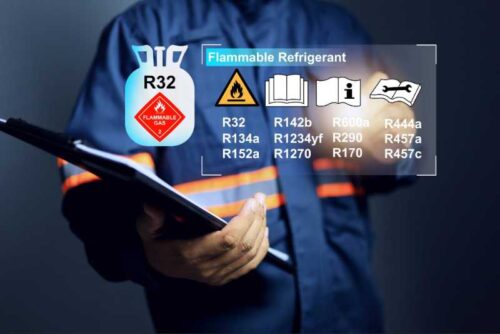 A2L equipment isn’t something to fear, but it does require careful planning. Here’s what tends to change in real projects.
1. Equipment selection may involve room size and refrigerant limits
Some system types must stay within refrigerant charge limits based on the space they serve and how the area is configured. In simple terms: how much refrigerant the unit holds and where it’s installed can matter more with A2Ls.
That means the “best” unit on paper might not be the best fit for your building without additional design steps.
2. Leak detection may become a bigger part of the system
In many A2L applications, leak detection is part of the overall safety approach. You may also hear about UL (Underwriters Laboratories) requirements or “UL standards.” UL is an organization that publishes product safety standards, and many manufacturers design equipment to meet those standards.
From an operations standpoint, if a system includes detection and safety shutoffs, your team should know:
- What triggers an alarm
- What happens next (shutdown, ventilation, or a safety mode)
- Who gets notified
- How resets work, and who is allowed to perform them
That should all be clear during turnover, not discovered during an after-hours alarm.
3. Piping routes and building pathways matter more than teams expect
Refrigerant piping is often the hidden challenge in retrofits. With A2Ls, your design and installation team may need to consider:
- Where piping runs (and whether those runs increase risk)
- How piping is protected from puncture or damage
- How shafts and penetrations are handled in older buildings
This is one reason we encourage building teams to start with a system review before committing to equipment, especially when the building is older or routing options are limited.
If you’re planning a broader upgrade, this may help you map the project clearly:
CONDUCTING HVAC SYSTEM ANALYSIS: A COMPREHENSIVE GUIDE
4. Service practices should be consistent and well documented
A2L systems still rely on good fundamentals: leak prevention, proper recovery, correct parts, and trained technicians.
But the biggest difference is this: your service plan needs to include the safety components, not just the mechanical unit. That can mean scheduled testing and verification of sensors, controls, and alarms.
This also ties into monitoring and visibility. A well-managed BMS (building management system) can help your team track alarms and trends across equipment.
WHY BUILDING MANAGEMENT SYSTEMS ARE IMPORTANT FOR HVAC
What facility managers should ask contractors before upgrades
When a contractor proposes A2L equipment (or says A2L is the only available option), ask these questions early to prevent permitting delays and surprise scope changes.
1. What refrigerant does the equipment use, and is it A2L?
Ask for the exact refrigerant (example: R-32 or R-454B) and confirmation it is A2L (low-toxicity, mildly flammable). Have it listed in the proposal and ask what changes this creates for your building, especially around safety controls and installation details.
2. What NYC requirements does this project need to meet?
Ask how the design will align with DOB requirements, and whether any FDNY coordination is needed for alarms, controls, or other safety items. Also confirm who is responsible for the filing process, inspections, and closeout documents.
3. Will this system require leak detection, ventilation changes, or added controls?
If yes, get clear answers on sensor locations, what triggers an alarm, and what the system does automatically (shutdown, exhaust, safe mode). Confirm who receives notifications and what your staff should do step-by-step when an alarm happens.
4. Where will the refrigerant piping run, and how will it be protected?
Ask for a piping route overview (shafts, corridors, tenant spaces) and how the contractor will protect piping from damage, handle penetrations/firestopping, and maintain service access. Piping choices can drive both cost and long-term risk.
5. What will my team need to do differently after installation?
Request a short operator playbook with alarm response steps, after-hours contacts, reset procedures, and maintenance tasks tied to sensors/controls. Also ask what must be documented (alarms, service actions, recurring issues) and whether staff training is included.
How we help NYC buildings plan for A2L
At Donnelly Mechanical, we help NYC building teams make HVAC upgrades that are safe, code-aligned, and practical to operate.
That often includes:
- Reviewing the existing conditions so equipment selection matches real building constraints
- Coordinating design and installation details that affect compliance and long-term safety
- Building a service plan that supports the system you’re installing, including the safety components that come with A2L equipment
If you’re planning a replacement, modernization, or heat pump project and A2L refrigerants are part of the discussion, we can help you confirm the right details before you commit, so you avoid surprises during permitting, installation, or turnover.
A2L refrigerants are designed for use in modern HVAC and refrigeration equipment, but they are mildly flammable, so systems must be installed and maintained with the right safety features and procedures. Safety depends on correct design, correct installation, and consistent service.
Not automatically. “Mildly flammable” means the refrigerant can ignite under certain conditions, which is why codes and equipment include safeguards. The goal is to reduce risk through design, detection, ventilation where needed, and clear operating procedures.
In many cases, yes. The basics remain the same, but your plan may also need to include inspection and testing of sensors, controls, and alarms tied to refrigerant safety. Your service provider should explain exactly what gets checked and how often.
Sometimes, but it depends on the equipment type, refrigerant charge, space layout, piping routes, and NYC compliance requirements. A pre-project review helps determine whether additional controls, detection, or routing changes are needed.
ditional controls, detection, or routing changes are needed.
Ask for a clear turnover package that includes:
- Refrigerant type and total charge
- Safety control sequences (what happens during an alarm)
- Sensor locations and what they monitor
- Reset steps and who should perform them
- A maintenance checklist for both mechanical and safety components
 Get in Touch